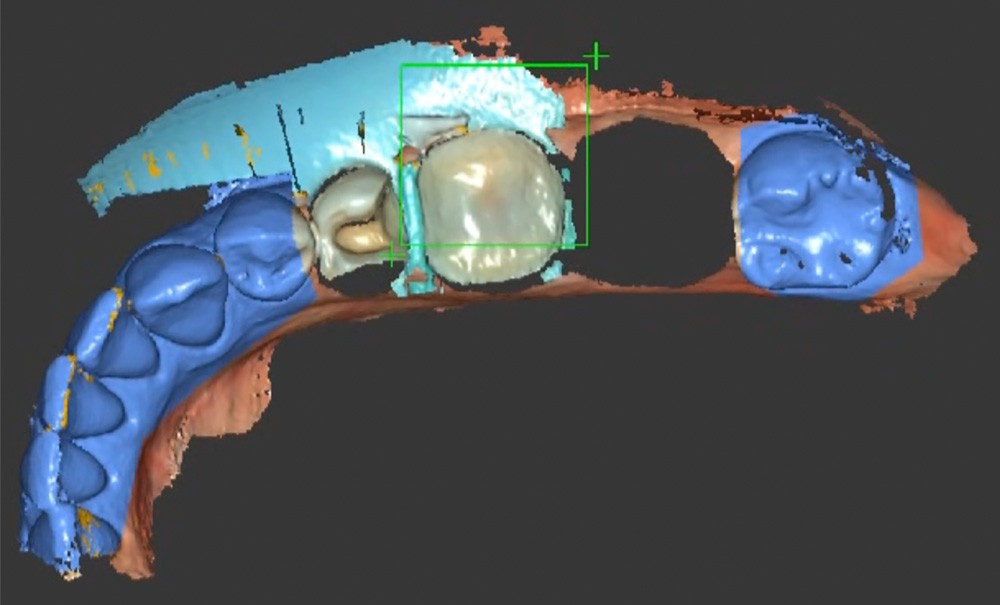

The recent past of dentistry has been marked by a clear digital shift [1, 2]. Tools such as intraoral scanners, computer-aided design (CAD) and computer-aided manufacturing (CAM), by becoming completely reliable and affordable, today greatly facilitate surgical, restorative and prosthetic treatments. [3]. Better still, it is now possible to combine the use of rubberdam in adhesive restorative dentistry and digital impression [4]. It is accepted on the one hand that preparing restorations glued under rubberdam presents numerous benefits, insofar as it preserves the dentin from any per- and postoperative contamination when preparation and immediate adhesive sealing of the dentin are carried out simultaneously [5, 6, 7]. On the other hand, since the dam by definition combines isolation and retraction of peripheral soft tissues, there is no more opportune and easier time to make the impression of the preparations. The advent of the digital brings a real upgrade from this point of view. However, in order for the dam/digital impression synergy to be effective, it is necessary to ensure that the original position of the teeth is recorded and not the dental position resulting from a migration of the teeth included in the operating field, under the effect of the traction of the dam. Undesirable dental migrations would prevent creating efficient proximal contact surfaces or on the contrary would lead to the need to carry out many adjustments of the same proximal surfaces at the time of bonding; so many pitfalls that hinder the sustainability of bonded restorations.
Through the presentation of a clinical case, the purpose of this article is as follows:
- present the isolation protocol allowing the best sealing and retraction around preparations for posterior adhesive restorations. Priority is then given to access deep margins, while preventing any dental movement under the effect of the traction of the rubberdam sheet
- describe the steps to make the digital impression under…